
As mission‑critical electronics continue to evolve, the demands placed on interconnect technology have never been higher. Aerospace, defense, and space platforms are pushing toward smaller form factors, faster development cycles, and architectures that can be serviced or upgraded without compromising reliability. Traditional soldered interconnects, long the backbone of electronic assemblies, are increasingly at odds with modern requirements. Thermal processing, reflow cycles, and solder‑related fatigue introduce risks that become unacceptable in high‑reliability environments.
CIN::APSE solderless compression connectors have emerged as a compelling alternative to traditional interconnect solutions. Representing the most advanced, flight‑proven implementation of Z‑axis compression technology, CIN::APSE products enable modular, SWaP‑optimized designs that maintain electrical and mechanical stability under extreme conditions.
CIN::APSE Compression Technology for High–Reliability Designs
Solderless compression connectors are reshaping how engineers think about system architecture and long‑term reliability. Instead of relying on heat‑driven processes and metallurgical bonds, CIN::APSE uses precision‑engineered compression contacts to create uniform, repeatable electrical connections. This shift has profound implications for manufacturability, serviceability, and system performance.
One of the most immediate advantages is the complete removal of solder, reflow, and thermal processing from the assembly workflow. Without the need for high‑temperature cycles, engineers can integrate sensitive components, thin substrates, and densely packed layouts without worrying about heat‑induced stress or warping. This also eliminates common solder‑related defects such as voiding, cold joints, and reflow inconsistencies.
The solderless nature of CIN::APSE interconnects also enables rapid assembly and rework. Modules can be installed, removed, or replaced without destructive processes, making field serviceability far more practical. For platforms that rely on modular Line Replaceable Units (LRU) or require rapid integration cycles, this capability dramatically reduces downtime and simplifies maintenance.
How CIN::APSE Works: Contact–Only vs. Plunger–Contact–Plunger
CIN::APSE interconnects rely on controlled Z‑axis compression, but the Contact‑Only and Plunger–Contact–Plunger configurations achieve this through different mechanical structures. Their behavior is defined by how the insulator guides compression and how the contact element engages the mating surfaces.
Contact–Only
In the Contact‑Only configuration, the insulator is the sole structural guide. Its hourglass‑shaped cavity centers the wire bundle, limits lateral movement, and defines the working stroke so compression occurs cleanly in the Z‑axis. The wire bundle compresses directly between the mating surfaces, creating multiple conduction points and a natural mechanical wipe while maintaining low inductance and high‑frequency stability. Key advantages include:
- Extremely low profile and high density
- Direct wire‑to‑pad compression for minimal inductance
- Ideal for LGA, flex‑to‑board, and tight‑pitch digital or RF arrays

Plunger–Contact–Plunger
In the Plunger–Contact–Plunger configuration, the insulator still positions the wire bundle, but the plungers introduce a guided mechanical interface that stabilizes the system under taller stack heights and repeated handling. Each plunger acts as a controlled piston, sharing responsibility for stroke limitation and force distribution while protecting the wire bundle from uneven loading. The contact maintains the same multi‑point, low‑inductance behavior, but the added mechanical structure improves durability and alignment. Key advantages include:
- Supports tall Z‑axis stackups with stable alignment
- Plungers add durability and handling robustness
- Best for board‑to‑board stacking where mechanical stability outweighs density

How CIN::APSE Compression Connectors Support Aerospace, Defense, and Space Electronics
Solderless compression interconnects fundamentally change how engineers approach reliability and serviceability in mission‑critical systems. By removing soldered connections from the equation, CIN::APSE avoids the most common long‑term failure modes associated with metallurgical joints.
Eliminating Solder–Related Risks
Soldered assemblies are inherently vulnerable to thermal cycling, mechanical stress, and fatigue. Over time, solder joints can crack, delaminate, or degrade, especially in environments with wide temperature swings or persistent vibration. CIN::APSE eliminates these risks entirely. With no reflow, no thermal cycling, and no heat‑induced stress, the interconnect remains mechanically stable throughout its service life.
This makes CIN::APSE interconnects particularly suited to thin substrates, sensitive components, and high‑density layouts where soldering can introduce unacceptable risks. The absence of soldered joints also reduces the likelihood of latent defects, improving long‑term reliability in mission‑critical deployments.
Serviceability and Maintainability
One of the most transformative benefits of CIN::APSE is its support for rapid assembly and non‑destructive rework. Engineers can install or remove modules without specialized equipment, enabling faster prototyping, easier debugging, and more efficient field repair.

For aerospace and defense platforms that rely on modular LRUs, this capability is invaluable. Systems can be upgraded or serviced without removing entire assemblies, reducing downtime and simplifying logistics. The result is a more serviceable architecture that supports rapid integration cycles and long‑term sustainability.
SWaP Optimization for Modern Platforms
Size, Weight, and Power (SWaP) constraints drive nearly every aspect of modern mission‑critical electronics. By enabling compact, modular interconnects, CIN::APSE allows engineers to design smaller, lighter, and more efficient systems. This is particularly important for airborne and spaceborne platforms, where every gram and cubic millimeter matters. The combination of mechanical simplicity and electrical performance makes CIN::APSE technology a natural fit for next‑generation mission systems.
CIN::APSE Interconnect Performance Under Extreme Conditions
Mission‑critical systems must operate reliably under shock, vibration, and temperature extremes. CIN::APSE’s compression architecture is specifically engineered to maintain stable electrical performance in these harsh environments.

Shock and Vibration Stability
Unlike soldered joints, which can crack or fatigue under dynamic loads, CIN::APSE’s compression contacts maintain their integrity through mechanical resilience. The uniform contact force and redundant touchpoints ensure that electrical pathways remain stable even during high‑vibration events such as launch, flight, or mobile operations.
Temperature Extremes and Cycling
CIN::APSE connectors are designed to perform reliably across rapid thermal transitions and long‑duration exposure to extreme temperatures. Because there is no soldered connection to fatigue or degrade, the interconnect maintains its mechanical and electrical properties throughout the mission. This makes CIN::APSE ideal for space systems, high‑altitude platforms, and defense electronics exposed to harsh environmental conditions.
High–Frequency and Mixed–Signal Capability
CIN::APSE provides low‑inductance, low‑resistance pathways suitable for RF, high‑speed digital, and power delivery applications. The redundant contact architecture preserves signal integrity across a wide frequency range, making the technology well‑suited for radar, communications, and advanced computing systems.
Where CIN::APSE Solderless Compression Excels
CIN::APSE is widely deployed across aerospace, defense, space, and high‑performance computing platforms where reliability, density, and maintainability are paramount.
| Application Area | Example Systems | Why CIN::APSE Excels |
|---|---|---|
| Aerospace and Avionics | Mission computers, flight controls, navigation systems | Ideal for modular avionics and compact electronics bays |
| Space Systems | Satellites, payload electronics, sensor packages | NASA TRL 9 flight‑proven performance |
| Defense and Electronic Warfare | Radar, EW systems, secure communications | High‑density, high‑frequency interconnect requirements |
| High‑Performance Computing | FPGA/ASIC modules, mezzanine cards, dense compute stacks | Mechanical and thermal advantages for advanced computing |
A Flight–Proven Interconnect Platform
CIN::APSE is the most mature solderless compression technology available today. With decades of deployment in operational aerospace and space environments, it has earned a reputation for reliability and repeatability.
A key indicator of CIN::APSE’s maturity is its NASA Technology Readiness Level 9 (TRL 9) rating, a designation reserved for technologies that have been fully flight‑proven through successful deployment on space missions. Achieving TRL 9 demands demonstrated reliability in the unforgiving conditions of spaceflight, where thermal extremes, radiation exposure, and mechanical stresses push every component to its limits. CIN::APSE’s TRL 9 status signals to engineers and program managers that the technology is not only qualified but trusted at the highest levels of mission assurance.
Why CIN::APSE Matters for Next–Generation Mission–Critical Electronics
As mission‑critical electronics continue to evolve, CIN::APSE interconnects provide a foundation for more reliable, serviceable, and SWaP‑efficient designs. By eliminating soldered joints and their associated points of failure, the technology reduces risk and enhances long‑term performance. Its modular, serviceable architecture accelerates development cycles and simplifies field maintenance, while its high‑density, lightweight design supports the next generation of aerospace, defense, space, and high‑performance computing platforms.
For engineers seeking to improve reliability, streamline integration, and optimize SWaP, CIN::APSE offers a proven, flight‑qualified solution. Explore our range of CIN::APSE solderless compression connectors or engage with our engineering team to review your requirements and discuss available configuration options.
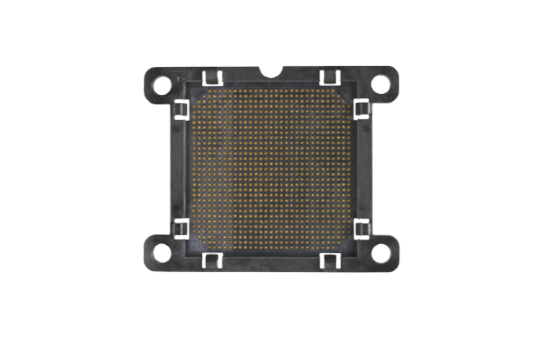 CIN::APSE Compression Connectors
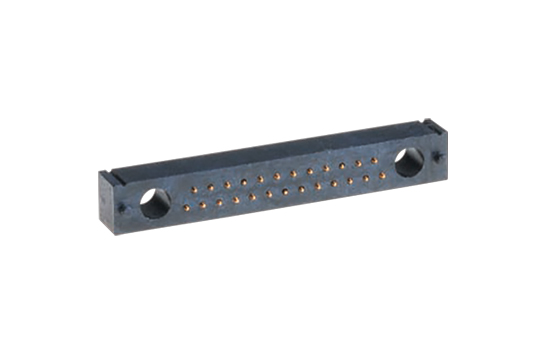 Stacking Connectors
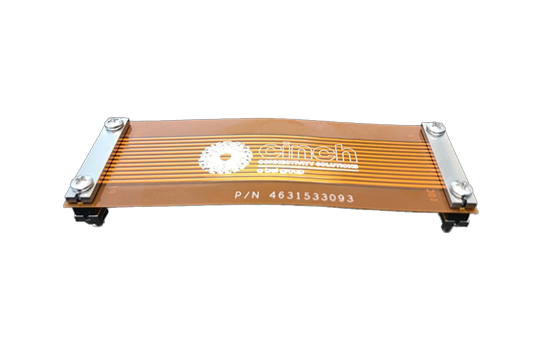 Stacking & Compression Jumpers and Assemblies