
Size, Weight, and Power (SWaP) have always influenced the design of aerospace and defense systems. However, the growing use of uncrewed and autonomous platforms is making these constraints increasingly important. Modern systems accommodate more sensors, greater processing power, and increasingly sophisticated communications, often without increasing the size or weight of the platform that carries them.
SWaP cannot be considered in isolation. A decision that reduces the size or weight of one component can affect power handling, thermal performance, or reliability elsewhere in the system. Effective SWaP design therefore depends on understanding the relationship between these characteristics and finding the right balance for the application.
This extends beyond major systems such as batteries, propulsion, and payloads. Every component consumes some of the space and weight available, including the connectors and cables that link the different elements of the platform. As systems become more complex and electronics are distributed throughout the airframe, the cumulative impact of these components can become significant.
Balancing Size Weight and Power in Connector Design
Connector selection for a SWaP-constrained design is therefore not simply a matter of finding a smaller component. The challenge is to reduce size and weight while still providing the electrical and mechanical performance required. At the same time, defense applications can impose demanding requirements for environmental protection and reliability.
The objective is to understand where improvements provide the greatest benefit to the complete system. This is particularly important in airborne applications, where weight can directly affect payload, range, and endurance. Saving weight in the interconnect system can allow additional sensors, greater battery capacity or other payload equipment to be carried instead.
Similar limitations apply beyond airborne systems. Uncrewed naval and land vehicles, as well as space-based systems, also face restrictions on size and weight. However, while size and weight may dominate some design decisions, sealing and corrosion resistance could be more important for a naval vehicle. SWaP provides a common principle, but the correct balance depends on the application.
Why Standard Military Connectors Struggle on Small UAVs
Many established military connectors were developed for full-size aerospace and defense platforms where the available space and weight were less restrictive than they are on today's compact uncrewed systems. They remain highly effective in those applications, but their size and weight can become significant when the same technology is installed on a much smaller platform.
The Scaling Problem: From Full-Size Aircraft to Compact UAVs
A connector that represents an insignificant proportion of the weight of a large aircraft can become important on a small Uncrewed Aerial Vehicle (UAV). The benefits of reducing size and weight accumulate across systems containing many individual interconnects. At the same time, the growing sophistication of modern systems means that distributed sensors and electronics need more connections than ever, creating demand for greater contact density within the available space.
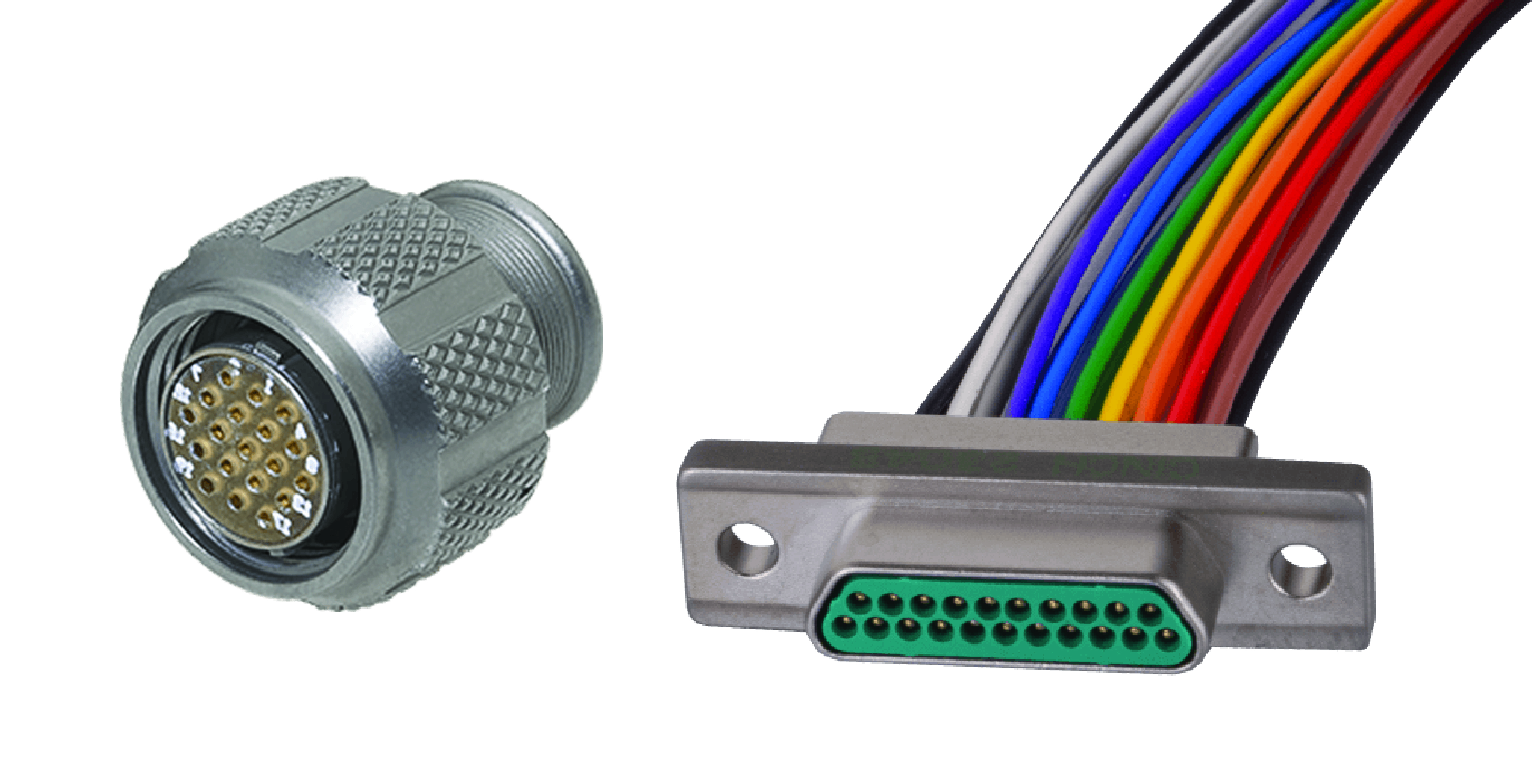
Micro-miniature connectors address this problem by combining compact dimensions with the electrical, mechanical, and environmental performance required for demanding applications. The category includes technologies developed specifically to provide reliable connectivity where conventional military connectors are too large or heavy.
MIL-DTL-83513 (Micro-D) and MIL-DTL-38999 Series III Standards Explained
| Standard | Connector Type | Key Feature |
|---|---|---|
| MIL-DTL-83513 | Micro-D (rectangular) | 1.27 mm (0.050 in) contact pitch |
| MIL-DTL-38999 Series III | Circular | Harsh-environment benchmark |
| Cinch MD801 | Micro-circular | Comparable performance to Series III, smaller footprint |
The MIL-DTL-83513 standard defines the Micro-D category for rectangular connectors. Micro-D connectors use a 1.27 mm (0.050 in) contact pitch, allowing a substantial number of contacts to be packaged into a small rectangular footprint. For circular connectors, MIL-DTL-38999 Series III provides an important benchmark for harsh-environment performance. Micro-circular connectors such as the Cinch MD801 provide comparable environmental and mechanical performance in sizes smaller and more densely populated than conventional MIL-DTL-38999 connectors.
Choosing the Right Connector for Your Application
Connector selection begins with what the connection needs to do. A high-density signal interface inside an avionics enclosure presents a very different problem from an exposed power connection running to a propulsion system, even when both are installed on the same aircraft.
The number and type of contacts provide an obvious starting point. Modern sensors and payloads can require large numbers of signal connections, making contact density important where panel or Printed Circuit Board (PCB) space is limited. Power connections create a different challenge. Current ratings need to be considered alongside contact size, operating temperature and the ability of the connector to dissipate heat.
Mechanical, Environmental and Harness-Level Considerations
The mechanical requirements are equally important. Some connectors may be mated only during manufacturing or major maintenance, while a modular payload could be removed and replaced regularly in the field. Vibration and shock can place additional demands on the contact system, particularly in propulsion systems and other locations exposed to continuous mechanical movement.
The connector also needs to be considered as part of the complete harness. Backshells provide strain relief and can contribute to electromagnetic shielding, but they also occupy space and add weight. The same is true of environmental seals and other accessories. Selecting a compact connector body provides little benefit if the complete assembly no longer fits within the available envelope.
This is why the operating environment needs to be understood before the connector geometry is chosen. An aerial UAV may place a high value on low weight while also exposing connectors to vibration and extremes of temperature. The conditions found in naval applications may make corrosion resistance, salt-fog performance and sealing vital. Ground systems encounter shock, vibration, dirt, and water, while space applications introduce their own temperature, vacuum, and qualification requirements.
Environmental Priorities by Platform Type:
- Aerial UAV: Low weight, vibration, temperature extremes
- Naval vehicle: Corrosion resistance, salt-fog performance, sealing
- Ground system: Shock, vibration, dirt, water
- Space system: Temperature, vacuum, qualification requirements
The smallest solution on a datasheet is not necessarily the smallest practical solution once all these requirements are taken into account.
Micro-Circular vs. Micro-D Connectors: Which to Choose
Circular and rectangular micro-miniature connectors offer different advantages. In many systems they are complementary technologies rather than direct alternatives.
Micro-Circular Connectors: Best for Exposed, Harsh-Environment Harnesses
Circular connectors are particularly useful for exposed and in-line harness connections. Their geometry lends itself to robust coupling, keying, and environmental sealing, while providing a practical interface for power and mixed-signal applications.
The Cinch MD801 micro-circular connector illustrates this approach. Designed to deliver performance comparable to MIL-DTL-38999 Series III in a smaller package, the MD801 is available in shell sizes from 5 to 13. It provides IP67 sealing when mated, an operating temperature range from -65°C ~ +175°C and more than 2,000 mating cycles. The series uses a dual-start ACME thread to provide fast, vibration-resistant coupling and offers a range of shell materials and finishes for different environmental requirements.

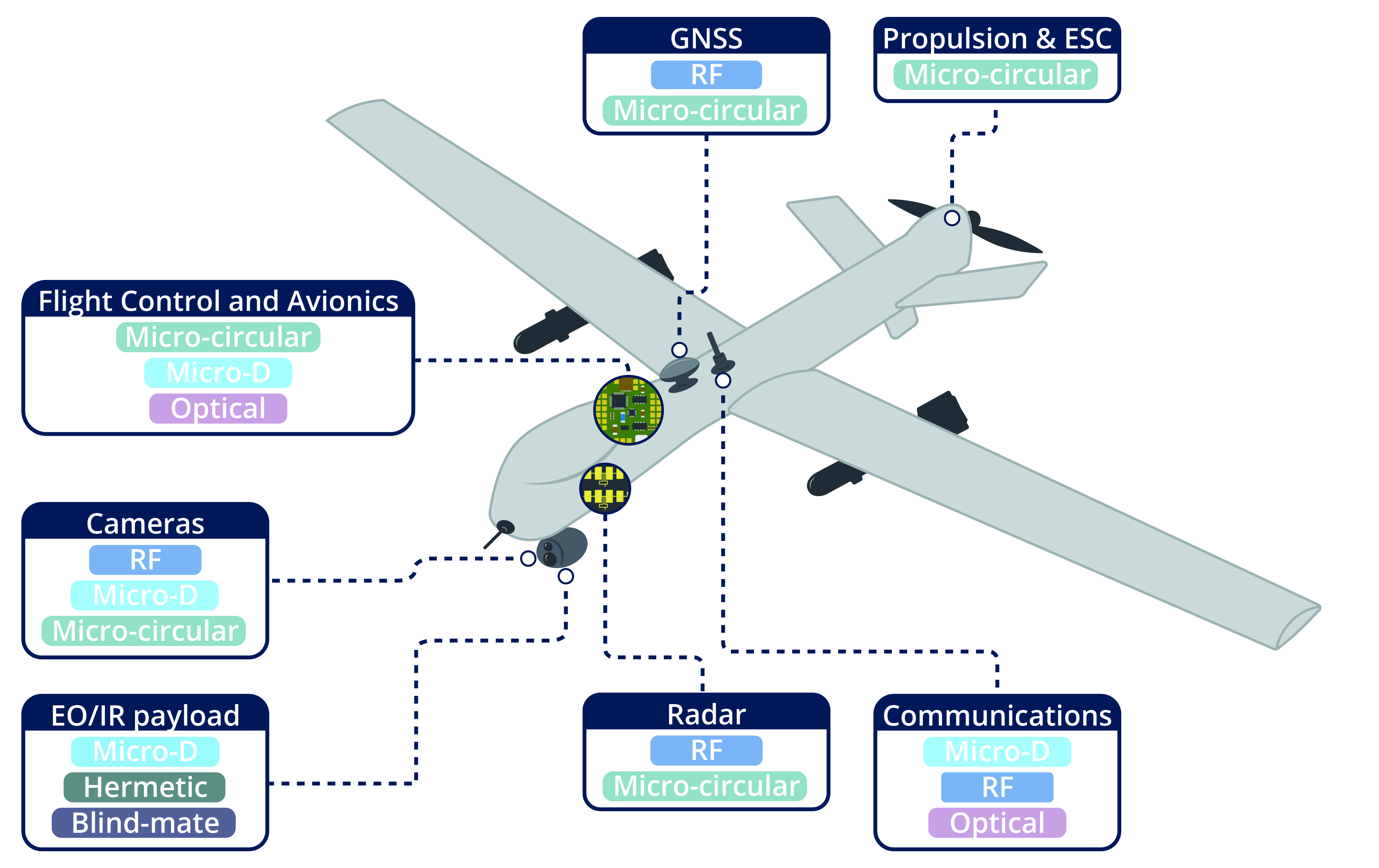
These characteristics make a micro-circular connector suitable for applications such as exposed avionics and flight-control harnesses, distributed sensor networks and propulsion systems where environmental protection and resistance to vibration need to be combined with reduced size and weight.
Micro-D Connectors: Maximizing Density in Compact Enclosures
Rectangular Micro-D connectors address the problem differently. Their geometry makes efficient use of panel and PCB space, particularly inside slim electronic enclosures where a circular connector can leave valuable space unused.
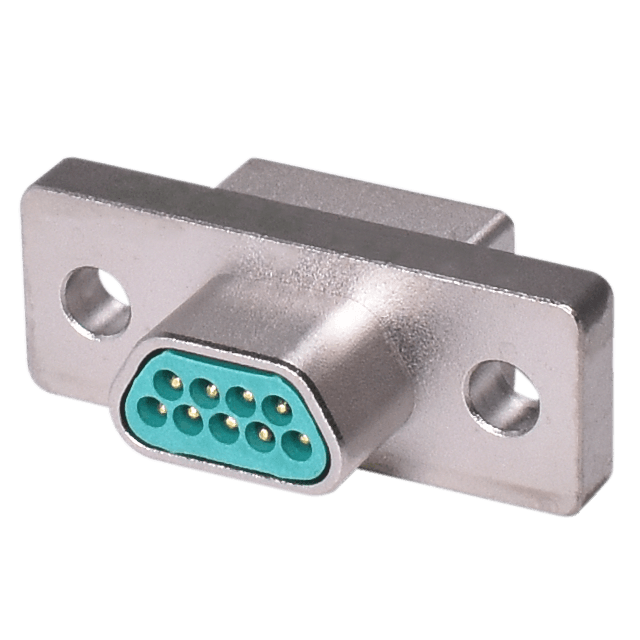
Cinch Dura-Con Micro-D connectors use a 1.27 mm contact pitch and are available in configurations from 9 to 100 positions. This allows high signal density within a compact footprint for applications such as embedded avionics, sensor arrays and payload electronics.
Dura-Con Twist-Pin Contacts: Redundancy and Vibration Resistance
Dura-Con connectors use Cinch twist-pin contact technology. When mated, the twisted wires create seven points of contact with the mating pin. The multiple contact paths provide redundancy and help maintain a reliable interface despite shock, vibration, and the small relative movements between contacts that can affect contact resistance over time. The contact action also provides a wiping effect during mating.
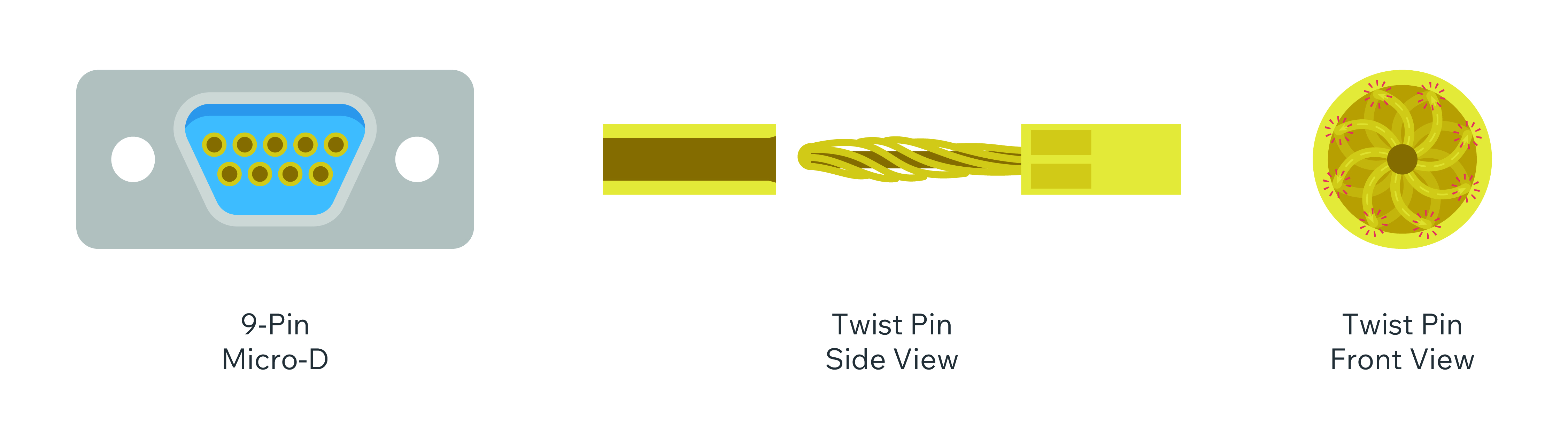
Dura-Con connectors can be supplied in cable-to-cable, cable-to-board, and cable-to-panel configurations, allowing the same basic technology to solve several different packaging problems. Standard versions can be used inside protected equipment, while hermetic versions provide sealed feedthroughs for applications where moisture or gas ingress cannot be tolerated.
Blind-Mating and Field-Replaceable Payload Connections
For modular systems, rectangular connectors can also form part of a blind-mating interface. Guide pins can align the two halves mechanically before the contacts engage, while floating mounts accommodate differences in alignment across the assembly. Where required, contact sequencing can ensure that ground connections are established before signal contacts during mating and remain connected until after them during unmating. This can be particularly useful for payloads designed to be replaced quickly in the field.
The choice between circular and rectangular connectors is therefore driven by the subsystem. An exposed propulsion harness might favor the sealing and mechanical characteristics of a micro-circular connector, while the avionics enclosure on the same platform uses Micro-D connectors to provide dense signal connectivity within the available PCB and panel space.
MIL-SPEC Qualification vs. COTS Connectors
Electrical and mechanical performance are not the only considerations. The qualification requirements of the program can influence the available connector choices and should be established early in the design.
Defense and government programs may require products that have been formally tested, qualified, and listed on the appropriate Qualified Products List (QPL). Formal MIL-spec qualification can provide traceability and procurement confidence for long-lifecycle programs or those in which MIL-DTL requirements flow through the supply chain.
When Commercial COTS Connectors Are a Better Fit
Not every application requires this approach. Commercial UAVs, electric Vertical Take-Off and Landing (eVTOL) aircraft, prototypes, and other emerging autonomous platforms may be able to use ruggedized Commercial-Off-The-Shelf (COTS) products that provide the required performance without formal QPL status. This can provide greater flexibility where development schedules, availability or cost are important considerations.
| Factor | MIL-SPEC / QPL | Ruggedized COTS |
|---|---|---|
| Best for | Long-lifecycle defense programs, supply-chain traceability requirements | Commercial UAVs, eVTOL, prototypes, emerging platforms |
| Key advantage | Procurement confidence, formal traceability | Development speed, flexibility, cost |
| Typical requirement source | Government/defense programs | Cost, schedule, or availability constraints |
Qualification should therefore be treated as part of connector selection rather than paperwork to be addressed once the design is complete. Discovering late in a program that a selected connector does not meet the required qualification path can have consequences far beyond the interconnect itself.
Final Selection Criteria for UAVs and Uncrewed Systems
A modern UAV provides a useful example of how these decisions come together. Flight-control and avionics harnesses may use micro-circular connectors where environmental protection, vibration resistance and compact dimensions are important. Propulsion and electronic speed controller connections add current handling to those requirements.
Inside an Electro-Optical/Infrared (EO/IR) sensor or other compact payload, available PCB area may instead favor a Micro-D. Pressure or altitude-sensitive equipment could require a hermetic interface, while a field-replaceable payload may benefit from blind mating. Communications equipment might combine high-density Micro-D signal connections with dedicated Radio Frequency (RF) interfaces. The most effective architecture may combine several connector technologies, using each where its particular characteristics provide the greatest benefit.
Micro-miniature connectors are therefore more than smaller substitutes for conventional connectors. They allow designers to reduce the space and weight devoted to connectivity while retaining the electrical, mechanical, and environmental performance that the application demands.
The objective is not to find the smallest connector available. It is to understand the requirements of each connection and choose an interconnect that meets them while making the most effective use of the size, weight, and power available to the complete system. Explore Cinch's micro-miniature connector solutions or contact our engineering team to discuss your application's requirements.
 MD801 Series Connectors
 MIL-DTL-83513 Micro-D Connectors
 RF & Microwave Connectors