
In most modern electro-mechanical applications, the purpose of a connector is straightforward: provide a reliable electrical interface while withstanding the environmental conditions expected throughout the life of the equipment. Whether installed in an aircraft, satellite, or military vehicle, connectors are expected to continue performing their electrical function for as long as the platform remains in service.
A connector designed for hypersonic missiles follows a very unique set of rules. When Mounted flush with the exterior airframe, the connector is responsible for transmitting sequential signals from the launch platform prior to liftoff. Once launched, its electrical role is complete, leaving the connector behind as part of the airframe itself. It must remain physically intact while exposed to one of the harshest operating environments encountered by electrical connectors.
During the launch sequence, it experiences high levels of shock and vibration. Once in hypersonic flight, the connector is exposed directly to high surface temperatures generated by aerodynamic heating. Meeting these requirements demands a connector capable of surviving conditions beyond the limits of conventional connector technology.
Why Conventional Connector Technologies Fail Under Launch Conditions
The operating limits of connectors are largely defined by the materials used in their construction. Conventional connector inserts are typically manufactured from high-performance engineering plastics or epoxy-based materials that combine excellent electrical and mechanical properties and are suitable for most aerospace and defense applications.
The Temperature Ceiling of Standard Insert Materials
In this application, aerodynamic heating was expected to raise the exposed airframe surface to temperatures between 500°C and 700°C during acceleration to hypersonic speed and throughout the subsequent flight profile. Unlike other critical systems that may benefit from insulation or thermal protection, the connector is directly exposed to these conditions.
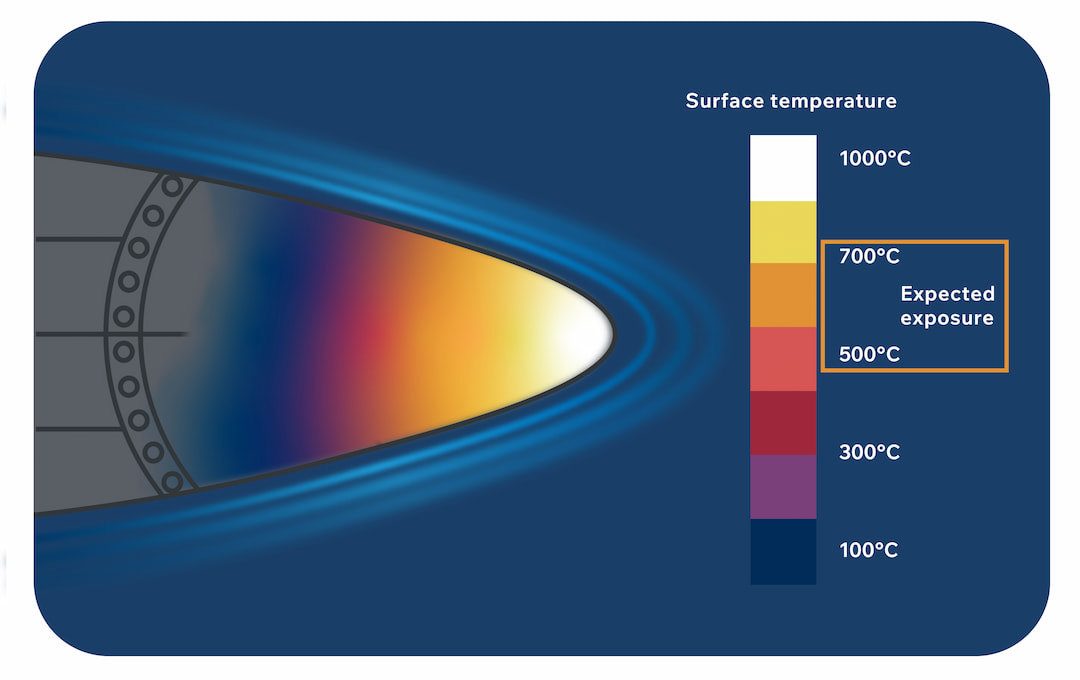
At these temperatures, conventional insert materials lose their structural integrity. Similarly, traditional sealing methods cannot provide the stability required to protect the airframe under sustained thermal loading.
Surviving Launch Before Surviving Flight
Before entering the hypersonic environment, the connector must first survive launch. At launch, the propulsion system can generate 65,000 or more pounds of thrust, while the missile structure experiences the combined shock and vibration loads of monumental G levels. Critically, the connector must maintain a reliable electrical interface during this process, ensuring the missile remains connected long enough to complete the required sequence before disconnecting cleanly from the launch umbilical.
Because the connector is mounted flush with the airframe, the launch umbilical must disengage laterally rather than axially. This coplanar disconnect prevents the use of conventional locking and retention features.
Pre-Launch vs. In-Flight: Two Roles for One Connector
Once launched, the connector’s electrical role is complete. However, while it is no longer expected to transmit signals, it must remain mechanically intact throughout the remainder of the flight. Contacts, inserts, seals and housing components must survive without disintegrating or compromising the surrounding airframe. An assembly that fractures under thermal loading or creates a breach in the airframe represents a mission-critical failure, even though it is no longer required to transmit signals.
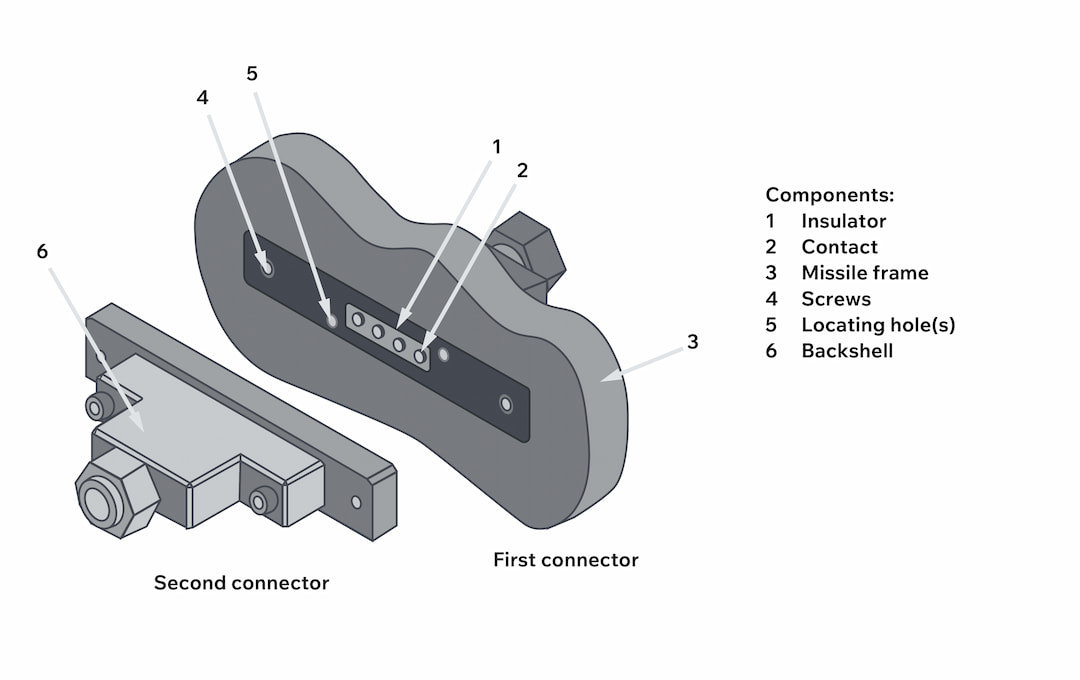
Understanding these two distinct operating phases provides the context for every engineering decision that followed. Material selection, contact architecture, sealing technology and manufacturing processes were all driven by the need to satisfy two very different sets of performance requirements within a single connector design.
Ceramic Inserts for High-Temperature Interconnect Design
The insert is one of the most important components in any electrical connector. It maintains the precise position of each contact, provides electrical insulation between circuits, and ensures that the connector continues to perform reliably throughout its service life.
In conventional military connectors, this role is typically performed by a high-performance engineering plastic or epoxy-based material. For the hypersonic application, however, these materials simply could not withstand the temperatures expected on the missile's exterior surface. The solution was to replace the conventional insert with a machinable, high-temperature ceramic.
The Tension Problem with Press-Fit Ceramic Contacts
Adopting ceramic introduced an entirely new set of engineering challenges because the material behaves very differently under mechanical loading. It performs exceptionally well in compression but is comparatively weak in tension. This presented a significant problem because the contacts were designed to be retained using an interference, or press-fit, arrangement. Press-fitting a contact into a precisely machined hole creates tensile stresses around the hole itself. If the interference is too great, the ceramic fractures. If it is too small, the contact may not be retained securely.
| Property | Conventional Insert Materials | Ceramic Insert |
|---|---|---|
| Typical Composition | High-performance engineering plastics / epoxy-based materials | Machinable, high-temperature ceramic |
| Max Temperature Tolerance | Loses structural integrity well below 500–700°C | Withstands 700°C sustained exposure |
| Mechanical Behavior | Stable in both tension and compression | Strong in compression, weak in tension |
| Contact Retention Method | Standard interference (press-fit) fine | Press-fit requires careful tensile-stress control to avoid fracture |
| Manufacturing | Widely available, conventional tooling | Requires specialized machining; few qualified suppliers |
| Best Suited For | Most aerospace/defense applications | Extreme-temperature, direct-exposure environments |
Table 1: Conventional vs. Ceramic Insert Material Comparison
Machining ceramic to the accuracy required for connector inserts is a highly specialized process, with relatively few suppliers capable of consistently achieving the necessary dimensional tolerances. Developing the insert therefore involved not only solving the engineering problem but also identifying and qualifying a manufacturing partner capable of producing the component repeatedly to specification.
Designing Pogo Pin Contacts to Enable Lateral Disconnect
Most electrical connectors are designed around axial mating. The plug inserts directly into the receptacle, where locking mechanisms or retention features prevent accidental separation while maintaining the required contact force.
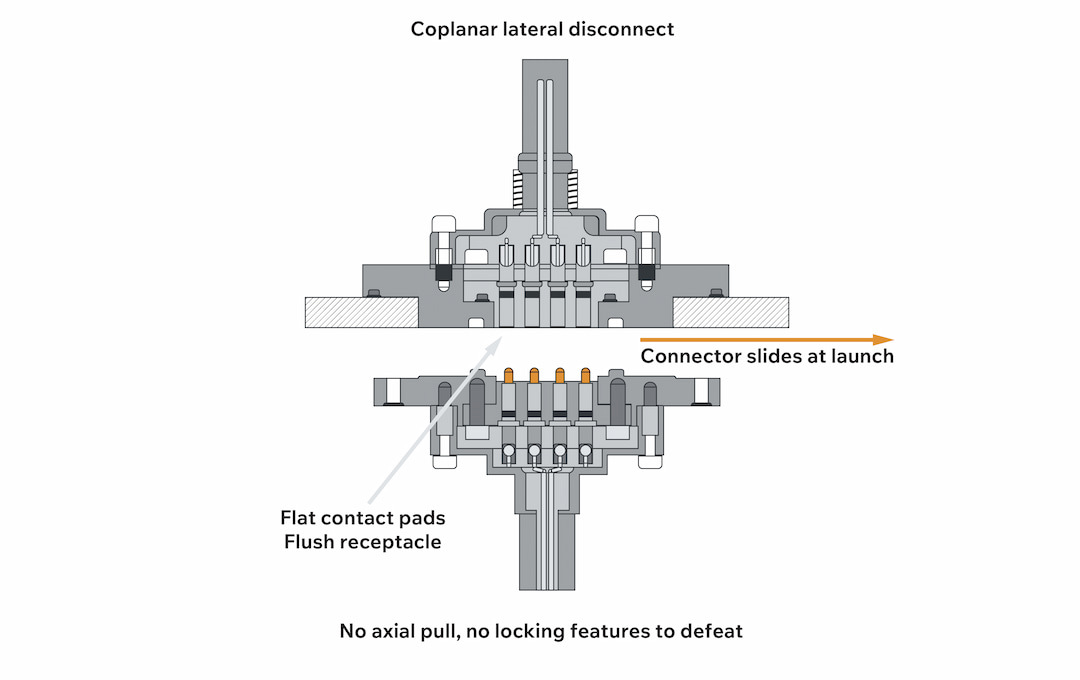
Connectors designed for missile launch cannot use the same technique. Because the receptacle is mounted flush with the missile's exterior surface, the launch umbilical cannot disengage by pulling directly away from the connector. Instead, as the missile leaves the launcher, the plug separates by sliding laterally across the face of the receptacle.
Why Axial Mating Doesn't Work for Missile Launch
Any conventional locking feature that resists lateral movement would interfere with the disconnect sequence. At the same time, the assembly must remain securely mated throughout storage, transportation, environmental exposure and the launch process. To achieve this, the design uses spring-loaded pogo pin contacts mating against flat contact pads.
The spring-loaded pogo pins maintain a consistent normal force against the mating surface, accommodating manufacturing tolerances and thermal variation while preserving contact under vibration. This helps maintain reliable electrical contact throughout the pre-launch phase, even after prolonged exposure to demanding environmental conditions.
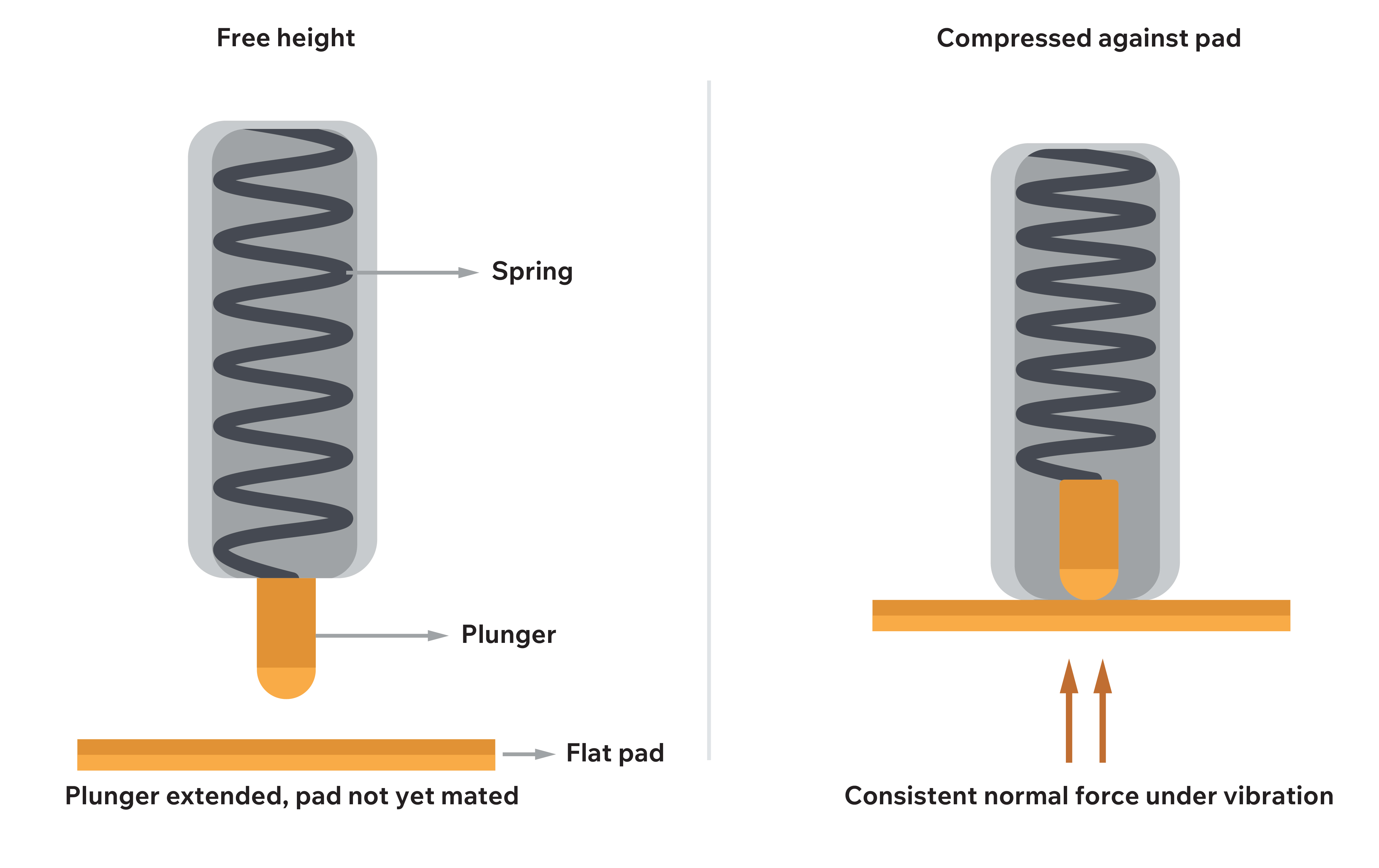
The geometry also enables a clean coplanar disconnect. As the plug slides away from the receptacle during launch, the contacts disengage smoothly without requiring axial withdrawal or complex release mechanisms.
Metallic Jet Seals for Airframe Integrity at Hypersonic Speeds
While developing the insert and contact system presented significant engineering challenges, protecting the integrity of the airframe is one of the most demanding aspects of the project.
Once the missile is in flight, the receptacle becomes part of the external structure. Any failure at the interface between the receptacle and the airframe could compromise the surrounding structure under extreme thermal and aerodynamic loading.
A metallic jet seal was adopted because conventional sealing methods rely on materials and designs that are not intended for the temperatures encountered during hypersonic flight. The seal creates its sealing effect through the controlled deformation of a precision-formed metal element during installation, allowing it to maintain performance under conditions where polymer-based materials would not survive.
The seal itself had to be sourced from a specialist supplier, while the connector body required a precisely engineered groove capable of retaining the seal and applying the required compressive load during installation. Predicting how the seal would behave as temperatures increased demanded both analytical work and extensive validation.
Qualification Testing: Shock, Vibration, and Thermal Survival
A connector intended for such an extreme environment must be validated against equally demanding qualification requirements. The qualification program therefore had to verify both the connector’s electrical performance before launch and its structural integrity throughout the remainder of the mission.
Pressure differential testing confirmed that the metallic jet seal maintained the integrity of the airframe under demanding environmental conditions.
High-temperature qualification was another key element of the validation program. The completed connector assembly was subjected to temperatures of 700°C for one hour, demonstrating its ability to withstand the thermal conditions expected during hypersonic flight. While these temperatures represent estimated airframe surface conditions rather than the operating temperature of the electrical interface itself, they establish the structural capability required once the connector has completed its primary electrical function.
The qualification criteria extended beyond traditional connector testing, demonstrating that the assembly could survive the combined effects of launch shock, vibration, pressure loading and prolonged exposure to elevated temperatures without structural failure.
Beyond Aerospace: Extreme-Environment Connectors for Drilling, Geothermal, and Rotating Machinery
Although these connectors have been developed for a highly specialized hypersonic application, many of the engineering principles established during this program have wider relevance. Across numerous industries, engineers face the challenge of designing electrical interconnects that continue to perform where conventional connector technology reaches its practical limits. Elevated temperatures, severe vibration, high pressures and aggressive operating environments are not unique to aerospace and defense.
The engineering principles developed for this program extend well beyond hypersonic missiles and can be implemented anywhere conventional connectors reach their practical limits, including:
- Downhole drilling systems: Extreme temperatures, high pressures, and severe mechanical shock combine with a requirement for reliable operation over extended periods.
- Geothermal energy installations: Connectors must survive prolonged exposure to high-temperature environments deep below the Earth's surface.
- High-speed rotating machinery: Vibration, thermal loading, and demanding mechanical conditions combine in ways that can exceed standard interconnect capabilities.
The engineering knowledge gained during the hypersonic program also provides valuable experience for future aerospace and defense applications. Whether supporting next-generation missile systems, high-speed flight vehicles or other platforms, the project demonstrates how connector performance can be extended through careful integration of materials science, mechanical design, specialized manufacturing and rigorous qualification testing.
Engineering Connectors for Hypersonic Extremes
Designing a connector for hypersonic flight requires engineers to think beyond the traditional role of an electrical interconnect.
In this application, the connector is required to perform two very different functions. Before launch, it must provide a reliable electrical interface under demanding environmental conditions while withstanding the shock and vibration generated during missile launch. Moments later, after the launch signal has been transmitted and the ground umbilical has disconnected, its purpose changes entirely. The connector becomes part of the airframe, where its ability to withstand extreme thermal and mechanical loading is now the critical measure of success.
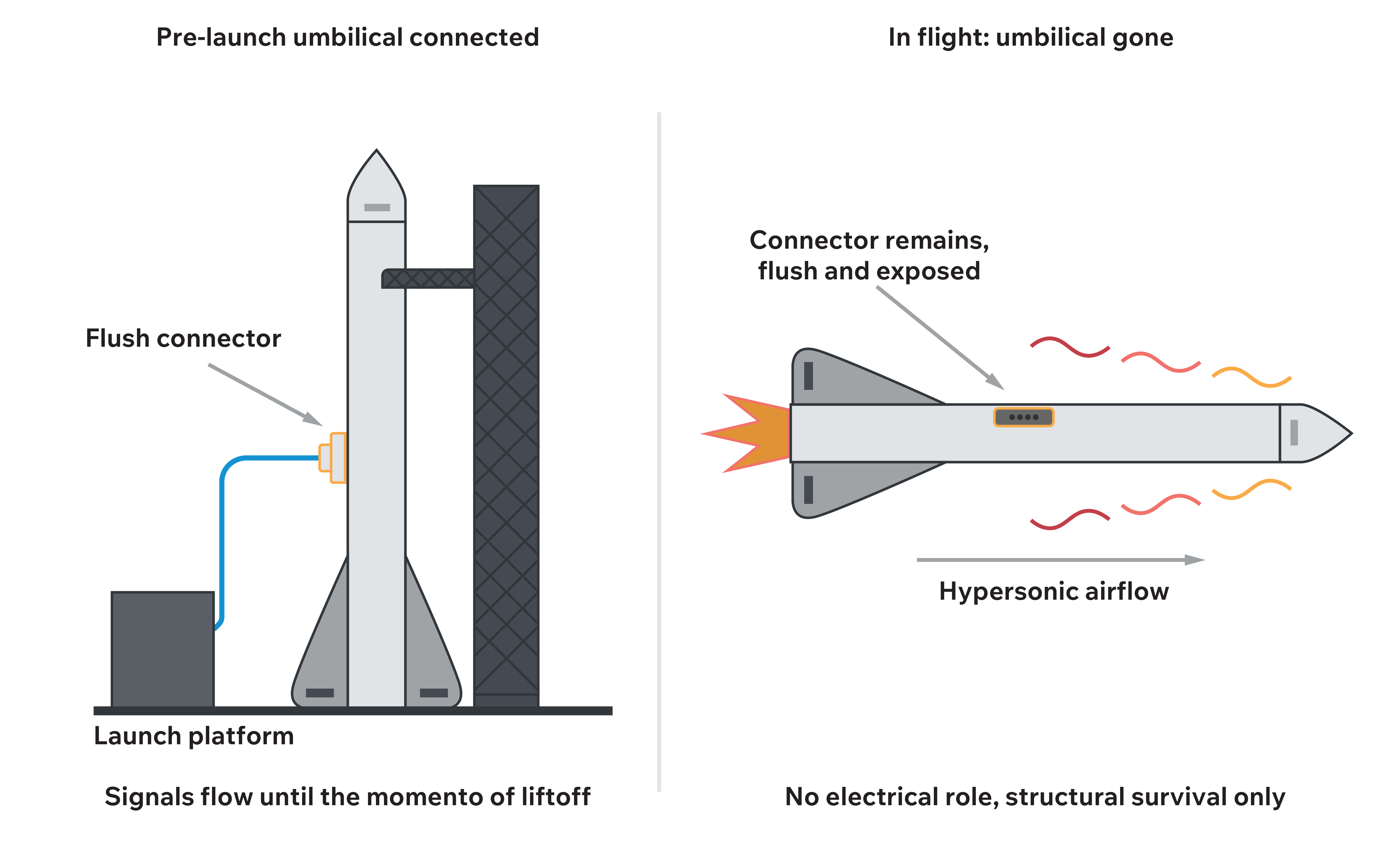
Meeting these conflicting requirements demanded far more than selecting higher-temperature materials. Every aspect of the design, from the ceramic insert and pogo pin contact system to the metallic jet seal and specialized manufacturing processes, was developed specifically to satisfy the unique operating conditions encountered during the mission.
The result demonstrates how engineering expertise, specialized manufacturing and rigorous qualification can extend connector technology beyond the limits of conventional designs. The materials, contact architecture and sealing methods developed during this program also provide valuable experience for future applications in which conventional interconnects cannot survive.
Explore Extreme-Environment Connector Solutions
From hypersonic missile programs to downhole drilling, geothermal energy, and high-speed rotating machinery, Cinch brings decades of engineering expertise to interconnect challenges where conventional technology reaches its limits. Our team partners with customers to develop custom materials, contact architectures, and sealing systems validated through rigorous qualification testing.
Explore our full range of harsh environment interconnects and discover how our engineering team can support your most demanding applications.
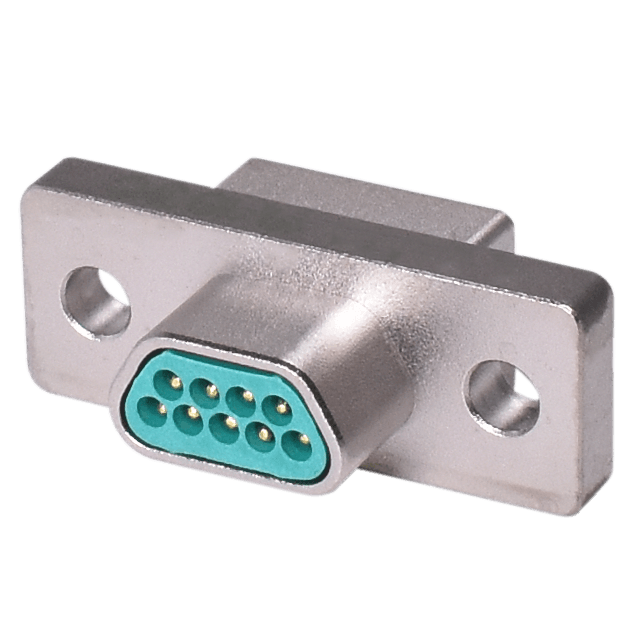 MIL-DTL-83513 Micro-D Connectors
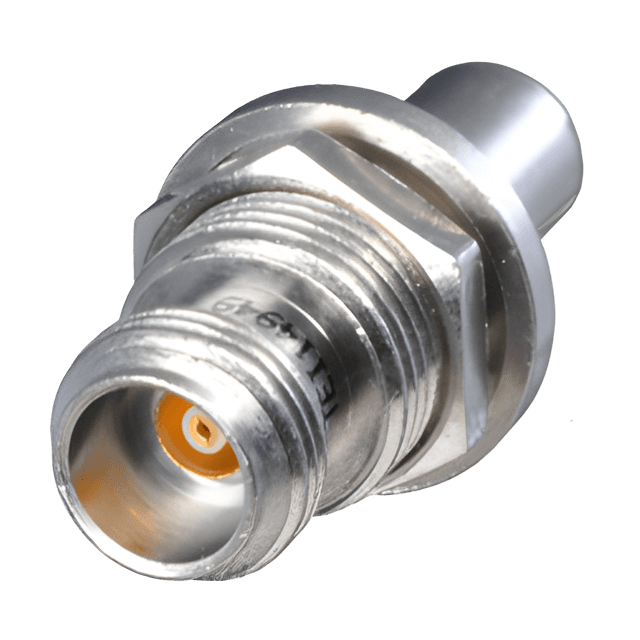 Space Qualified Products
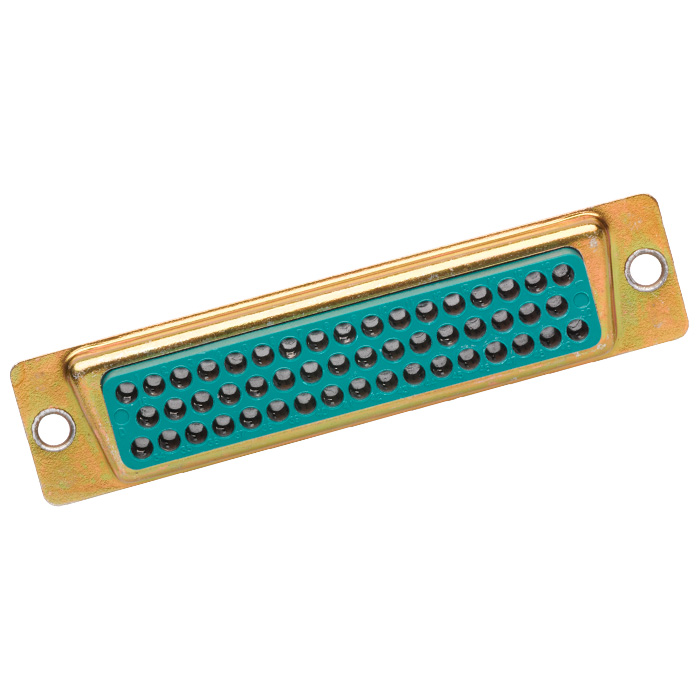 Defense-Grade Products